
Missouri entered the offseason with a clear need on the edge. With Zion Young graduating and Damon Wilson and Nate Johnson departing via the transfer portal, Eli Drinkwitz and defensive coordinator Corey Batoon were tasked with rebuilding much of the Tigers’ edge rusher rotation.
They took an important first step last weekend by landing Florida State transfer Jaden Jones.
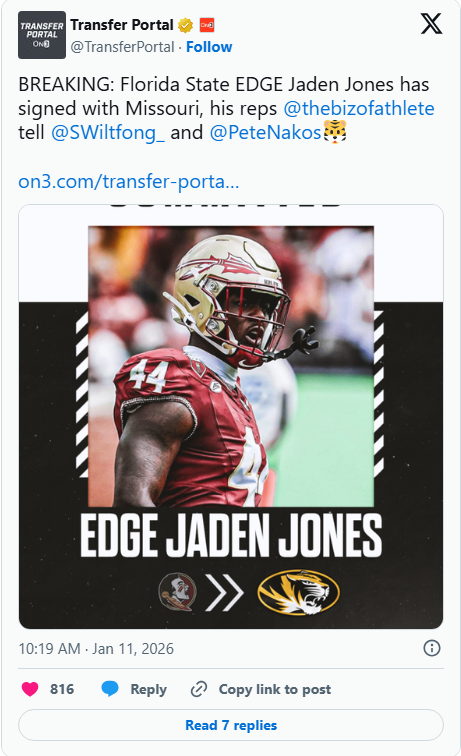
Jones was a steady rotational contributor for the Seminoles in 2025, appearing in all 12 regular-season games and earning three starts during ACC play. He finished the season with seven tackles, one tackle for loss and two quarterback hurries—career highs across the board. A Montgomery, Alabama native, Jones began his career at Hutchinson Community College before signing with Florida State ahead of the 2023 season and is expected to arrive in Columbia with two years of eligibility remaining.
Where He Fits
Jones’ strongest trait right now is his run defense. He graded well in that area on Pro Football Focus and profiles as an edge rusher who can contribute early downs and obvious rushing situations, even if his pass-rush production hasn’t fully developed yet.
osition. At 6-foot-5, 240 pounds, Jones mirrors the build of Darris Smith and shares a similar athletic profile to several recent transfer additions. That combination gives the coaching staff a developmental ceiling to work toward, particularly given MU’s recent success refining transfer edge defenders.
When He Plays
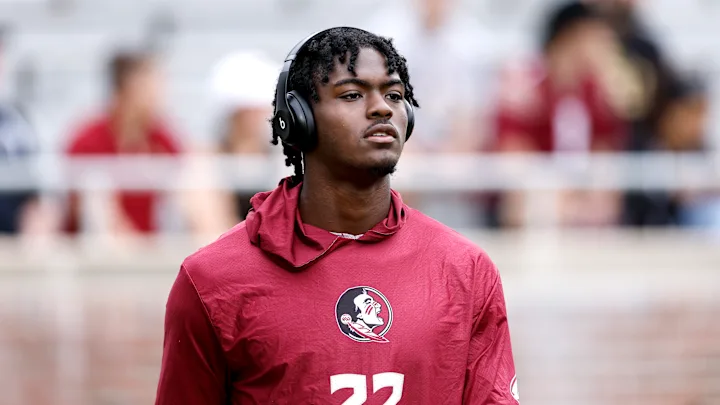
There will be snaps available at edge rusher next season, and Jones should factor into the rotation immediately. Smith and Langden Kitchen currently project as the frontrunners for starting roles, while Jones will compete with Daeden Hopkins, who flashed promise as a true freshman.
Realistically, Jones projects as a third-to-fifth option in the rotation in 2026—similar to the roles Johnson and Kitchen filled last season. Missouri also appears likely to continue searching the portal for an impact edge rusher who can step into a starting role, which would further define Jones’ place in the pecking order.
The bigger opportunity may come in 2027. Mizzou has consistently seen defensive transfers take a leap in their second year, and Jones’ power-conference experience and ideal physical tools make him a strong candidate to follow that path.
What It Means
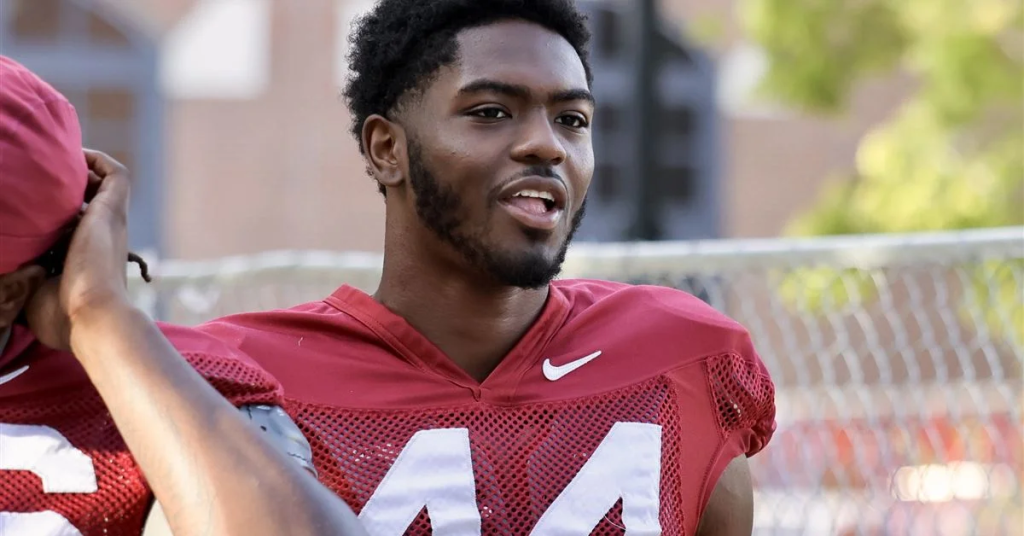
Jones’ addition feels familiar. Like Johnson and Kitchen a year ago, he gives Missouri a reliable depth piece now with the potential to grow into something more over time. While Johnson moved on after one season, Kitchen is poised for an expanded role, and Jones could be next in line if his development clicks.
For now, Jones provides immediate rotational stability and a long-term upside play. If he’s forced into a top-two role next season, that likely signals lingering issues for the defense. But as a fourth or fifth edge rusher, he offers exactly what Mizzou needs: experience, size, and the potential to become much more.