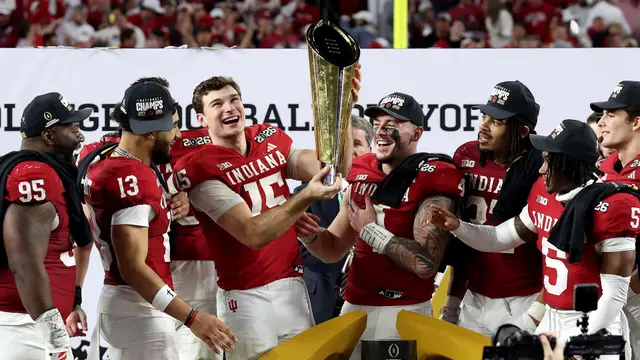
Somewhere in Missouri, a college football fan watched Indiana go 16–0, lift a national championship trophy, and asked the same question everyone else did:
“How in the world did that happen?”
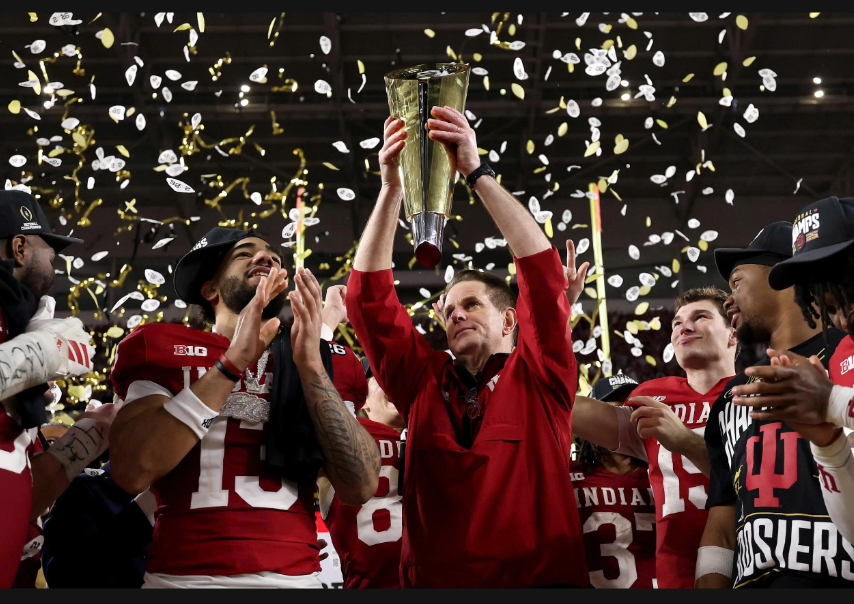
Indiana wasn’t just good in 2025. They were historically dominant. The losingest Power Five program in FBS history turned into an undefeated national champion in two seasons under Curt Cignetti. They didn’t just win—they embarrassed teams with far bigger brands, far louder hype, and (allegedly) far larger payrolls.
Naturally, the next question followed:
“Can my team do that?”
For Missouri fans, that question matters. And while the honest answer isn’t a clean yes or no, Indiana’s blueprint offers some very real lessons for Mizzou.
Let’s break down why Indiana worked—and what parts of it Missouri could realistically replicate.
Indiana Didn’t Buy a Title — They Spent Normally
Indiana’s estimated roster spend sits around $20–22 million. That number surprises people because it feels like a Cinderella story—but it isn’t a poverty budget.
Still, context matters.
- Blue bloods like Ohio State, Alabama, Georgia, Texas, and Michigan are widely believed to be in the $30–40 million range.
- G5 programs celebrate if they reach $2–5 million.
- Most Power Four teams live somewhere between $15–25 million.
Indiana didn’t outspend anyone. They simply spent like an average Big Ten or SEC program and made it count.
The takeaway?
Money matters—but throwing money at a roster doesn’t solve everything anymore. In the transfer portal era, players can get paid anywhere, and talent that isn’t developed or valued will walk.
The real edge isn’t spending more.
It’s spending smarter.
Indiana Mastered Talent Identification—and Refused to Let It Go
Indiana’s roster reads like a scouting department fever dream.
- Heisman-winning QB: 2-star recruit, denied a walk-on spot at Miami
- Elijah Sarratt (WR): No-star recruit out of St. Francis (PA)
- Multiple starters: No-star recruits across OL, DL, LB, DB, and even special teams
Outside of two 4-star receivers, nearly the entire lineup was built from unheralded prospects and developmental bets.
Indiana didn’t just find these players—they kept them.
That’s the hardest part in modern college football.
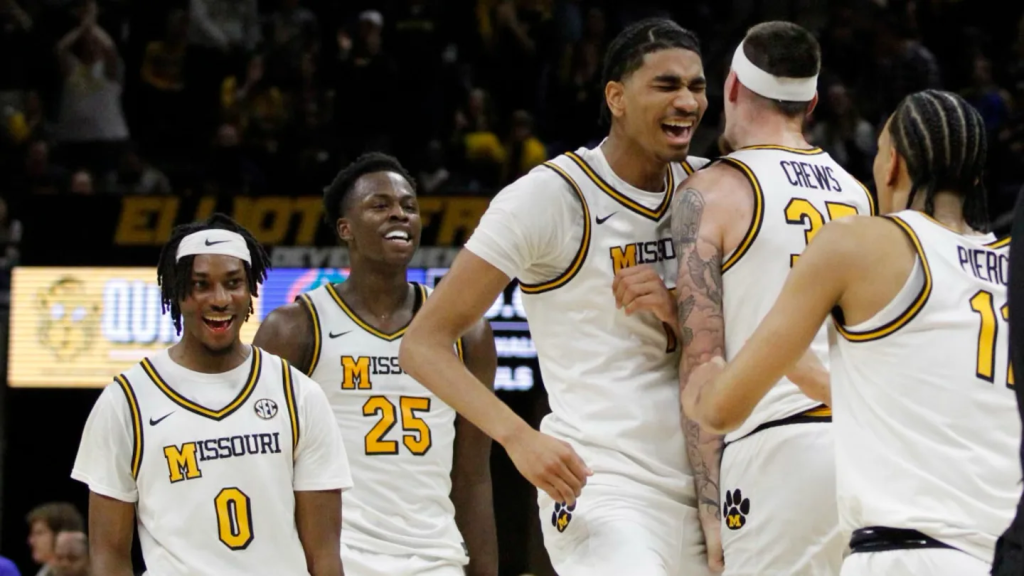
Think about Missouri examples like Zion Young or Drey Norwood. They didn’t generate fireworks when they arrived, but Mizzou identified them correctly, developed them, and retained them long enough to become high-level multi-year contributors.
Indiana did that at scale.
In a sport where rosters are flipped by 25% every year, Indiana’s ability to hold onto its core for multiple seasons gave them something rare: continuity.
Yes, Indiana Used the Portal—But They Used It Correctly
According to The Athletic, 63% of Indiana’s snaps in 2025 came from transfer portal players, the second-highest rate among Playoff teams.
That stat can be misleading without context.
Indiana’s portal success wasn’t random shopping—it was systematic continuity.
Curt Cignetti’s run didn’t start in Bloomington. It started at James Madison, where he had already built a winning culture. When he took the Indiana job in 2024, he brought 13 JMU players with him—players who already knew the system, expectations, and culture.
Those transfers weren’t one-year mercenaries. Many had already been with Cignetti for two, three, or four seasons.
This is the difference between Indiana and programs like Colorado or Florida State, who’ve seen portal-heavy builds spike for one year and crater the next.
Indiana didn’t just portal talent in.
They kept it together.
Indiana Was Old—and That Was a Weapon
Indiana’s average roster age: 23
Average years of experience per starter: 4.5
There were almost no underclassmen in the two-deep.
In a violent, physical sport, this matters more than people want to admit. A 23-year-old with four years in a strength program is going to overwhelm a 19-year-old—even if the younger player has more stars next to his name.
Indiana weaponized age, experience, and physical maturity. Over a full season, that advantage compounds.
The Throughline: Coaching Matters More Than Anything
This is the uncomfortable truth.
Curt Cignetti might be the best college football coach in the country.
Look at his track record:
- Took IUP from irrelevant to playoff contender
- Revived Elon from a multi-year disaster into a playoff team
- Turned James Madison into an FCS power and guided them seamlessly into FBS success
- Then walked into Indiana and did the unthinkable
He doesn’t just win—he transforms programs.
And despite being 64, Cignetti is shockingly progressive:
- Short, efficient practices
- Heavy emphasis on mental reps over physical wear
- No tackling in practice
- Lowest missed tackle rate in the country
- Zero tolerance for entitlement, regardless of talent
- Encourages staff to go home and live their lives
This is elite leadership. And it’s not easily copied.
So… Can Missouri Do This?
The honest answer?
Yes—but only parts of it.
Missouri can:
The real questions are harder:
- Can Mizzou improve retention of its best developmental players?
- Can they keep continuity in a volatile portal era?
- Is Drinkwitz more than a great recruiter and culture builder?
- Can Missouri consistently out-develop richer programs?
Those answers aren’t visible from the outside—and some may never be.
The Indiana Model Isn’t Impossible—Just Rare
Indiana didn’t discover a cheat code.
They executed at an elite level across every margin:
Smart spending.
Elite evaluation.
Relentless retention.
Experience over hype.
And a coach who maximized all of it.
Missouri can follow that path.
But paths like this require patience, discipline, and a near-perfect alignment of leadership and execution.
That’s why Indiana’s run was special.
And that’s why fans everywhere—including in Columbia—are still asking:
“Could that ever be us?”
Maybe someday.